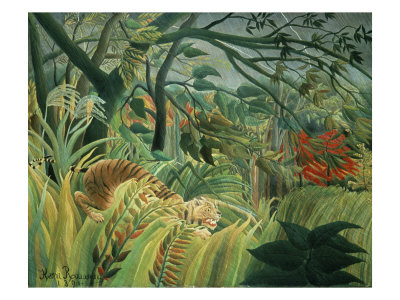
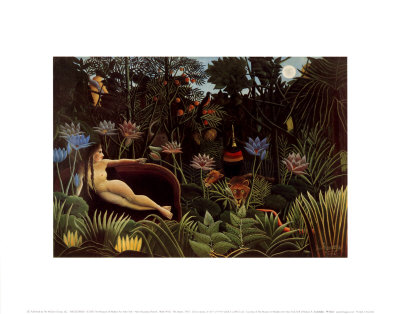
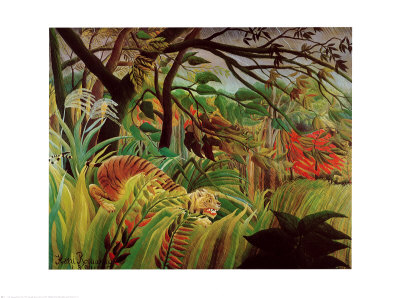
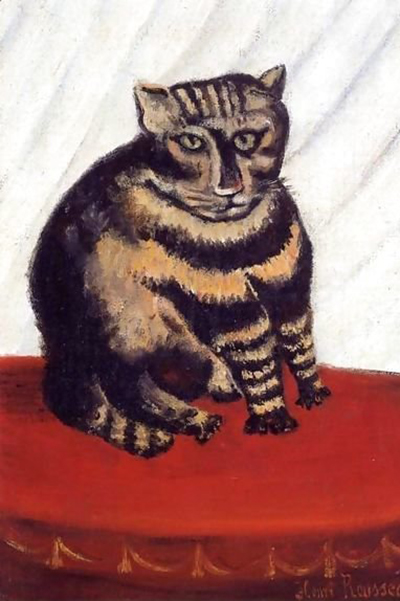
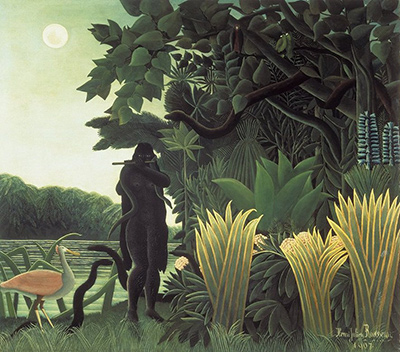
The allure of naive art lies in its ability to capture the raw, untamed spirit of nature without the constraints of academic precision. When artists approach foliage with the intention of perfecting every leaf and vein, they often inadvertently trap their work in a cage of hyper-realism, losing the very dream-like quality that defines the style. The true genius of a painter like Henri Rousseau was not in the meticulous rendering of botany, but in the imaginative freedom to suggest life rather than define it with rigid lines. To create a convincing yet stylized jungle or forest, one must learn to break the rules of observation and embrace the energy of growth over the geometry of form.
The Trap of Hyper-Realism
Many beginners struggle with the temptation to paint leaves exactly as they appear in a photograph or a real garden. This obsession with accuracy leads to a forest that looks dead, stiff, and disconnected from the viewer. In naive art, the goal is to evoke the feeling of a wild place, not to document its botanical structure. When every leaf is rendered with precise veins and correct proportions, the composition becomes a collection of isolated details rather than a cohesive, breathing organism. The eye has nowhere to rest because the pattern is too uniform, creating a visual fatigue that kills the mood. Instead of striving for photographic fidelity, the artist should aim for a loose, suggestive quality where the essence of the plant is clear, but the specifics are left to the imagination.
Breaking the Rigid Structure
A common structural error involves treating foliage as a series of separate, overlapping shapes that adhere strictly to perspective rules. In a realistic painting, leaves will overlap logically based on depth; in a naive masterpiece, they often overlap with a sense of chaotic abundance that defies strict physics. Artists often mistake this lack of logical order for poor technique, but it is actually the hallmark of the style. The leaves should appear to be bursting forward, pushing against one another in a way that suggests movement and growth rather than static arrangement. By ignoring the strict laws of linear perspective and instead focusing on the rhythm and flow of the brushstrokes, the foliage gains a vitality that rigid structures cannot achieve. This chaos is not a failure of form but a triumph of energy.
Mastering the Irregular Leaf Shape
One of the most effective ways to avoid realistic rigidity is to abandon the idealized oval or teardrop shapes often found in textbooks. Naive foliage thrives on asymmetry and distortion. Instead of drawing perfect ellipses, artists should let their hands move freely across the canvas, creating shapes that are jagged, curled, or fused together. These irregular forms mimic the way plants actually grow in the wild, tangled and unpredictable. Furthermore, the edges of the leaves should not be sharp and clean; they should be soft, blurred, or merged with the surrounding stems and background. This technique, often achieved through rapid, confident strokes, creates a sense of depth and texture without relying on shading or complex layering. The key is to let the paint flow organically, allowing the shape of the leaf to be determined by the motion of the hand rather than the measurement of a ruler.
The Power of Color and Texture
Color plays a crucial role in preventing foliage from looking too realistic. In academic painting, leaves are often shaded with cool tones and highlights to create volume. In naive art, colors can be flat, intense, and almost unnatural, yet this intensity makes the scene feel more magical. Using a limited palette of bright, saturated greens, yellows, and blues can create a harmonious vibration that feels more alive than a spectrum of nuanced earth tones. Additionally, texture should be conveyed through the brushwork itself. Thick, impasto strokes suggest the roughness of bark and the crispness of new leaves, while thin, quick lines suggest the delicate veins of a fern. Avoid smudging and blending too much, as this tends to create a muddy, realistic texture. Instead, keep the surfaces crisp and distinct, allowing the viewer's mind to fill in the gaps.
Common Pitfalls in Composition
To summarize the journey toward better naive foliage, here are the primary mistakes to avoid:
- Avoid drawing leaves that are too uniform in size or shape, as this creates a monotonous pattern.
- Do not use strict linear perspective to arrange branches, allowing them to twist and cross in a seemingly random, natural way.
- Resist the urge to add fine details like individual insect eyes or realistic soil particles; these distract from the overall mood.
- Steer clear of overly dark or shadowed areas that make the forest look gloomy and lifeless; maintain a luminous quality.
- Never try to paint the foliage in one single, static session; instead, work in layers of energy and suggestion.
By focusing on these principles, artists can transform their naive foliage from a stiff representation of nature into a vibrant, hallucinatory landscape that captures the imagination. The secret is to let go of the need for perfection and trust in the chaotic beauty of the wild.