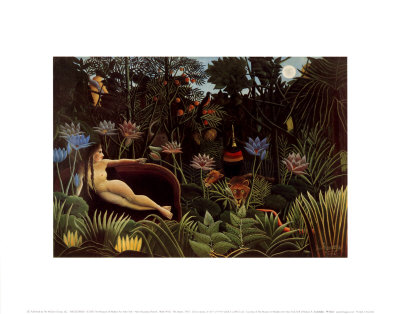
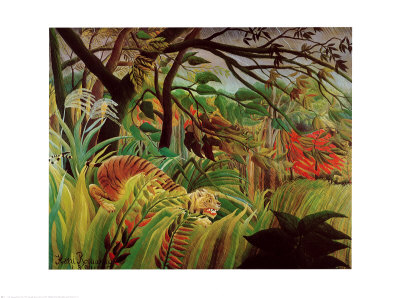
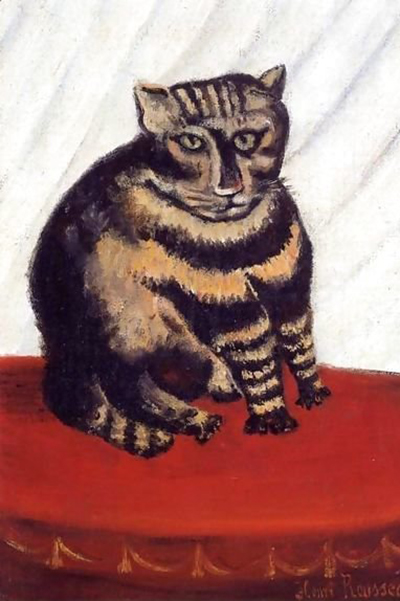
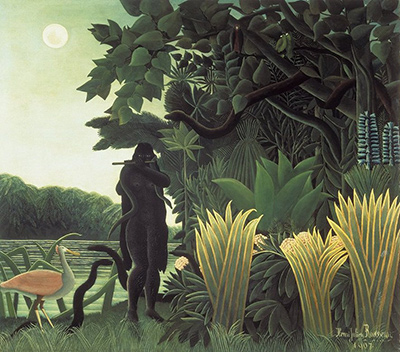
One of the most frequent stumbling blocks for those attempting to emulate the style of Henri Rousseau lies in the treatment of light within the eyes of his naive characters. Many aspiring artists, driven by an instinct to render perfection, struggle to replicate the specific, often surreal quality of reflection found in Rousseau's work by trying to match real-world optical physics. The goal is not to create a photographically accurate mirror image, but rather to capture the internal spirit and narrative energy of the character, which often means prioritizing color harmony and symbolic meaning over geometric precision.
The Myth of Optical Perfection
In traditional academic painting, the reflection in an eye is a complex optical phenomenon that depends heavily on the curvature of the cornea, the distance from the object being viewed, and the specific lighting conditions of the environment. To render a realistic reflection requires a rigorous understanding of perspective and the accurate placement of a smaller, distorted version of the surrounding scene within the pupil. However, the essence of naïve art, as championed by artists like Rousseau, is a deliberate departure from these strict physical laws. In these works, the eye is not a window to the outside world; it is a vessel for the artist's imagination and the character's emotional state. When an artist tries to force a realistic reflection onto a naïve character, the result often feels jarringly modern and detached from the dreamlike atmosphere that defines the genre.
Instead of seeking to mimic the way light actually bounces off a surface, the artist should focus on how the light feels within the composition. A reflection in a naïve painting often acts as a secondary source of color rather than a literal copy of the foreground. It might be a vibrant splash of blue that doesn't match the sky, or a warm, glowing orb that suggests hope rather than a lamp. By accepting this departure from reality, the artist allows the character's gaze to connect more deeply with the viewer, creating a sense of intimacy and mystery that rigid realism cannot achieve. The reflection becomes a brushstroke in itself, contributing to the overall color palette and mood of the piece.
Techniques for Achieving Surreal Reflections
To successfully navigate this aesthetic, one must abandon the pursuit of technical accuracy in favor of stylistic consistency. The reflection should never look like a photograph taken through a magnifying glass. Instead, it should appear as a simplified, abstracted version of the environment, filtered through the character's unique perspective. Here are some practical guidelines for achieving this effect without succumbing to the trap of realistic rendering:
- Avoid detailed linear perspective when drawing the reflected objects; instead, use soft, blended edges to suggest the fuzziness of vision often associated with dream states.
- Do not worry about the exact proportion of the reflection relative to the eye; an exaggerated, almost comical size can be a deliberate choice to enhance the whimsical nature of the style.
- Focus on matching the value (lightness or darkness) of the reflection to the surrounding colors rather than trying to capture the exact hue of the object being reflected.
- Consider using bold, flat areas of color for reflections rather than gradients, maintaining the two-dimensional quality that is central to the naïve aesthetic.
By following these principles, the artist ensures that the eye remains a focal point of the character's personality rather than a technical exercise in optics. The reflection serves the composition, not the other way around.
Color Harmony Over Geometric Accuracy
The true magic of Rousseau's reflections lies in their ability to disrupt the viewer's expectations. A naive character might look directly at a red flower, but the reflection in their eye could be a swirling mass of gold and green that feels more magical than the flower itself. This approach requires the artist to trust their color theory instincts over their observational skills. If the reflection adheres strictly to the laws of physics, it risks anchoring the character to a specific, mundane reality, thereby dampening the ethereal quality of the painting.
When rendering these reflections, the artist should ask themselves what feeling they want the eye to convey. Is it confusion? Joy? Melancholy? The color chosen for the reflection should directly support this emotional narrative. For instance, if the character is looking at a dark, stormy forest but feels a sense of inner calm, the reflection might be a serene, pale blue instead of the dark greens and blacks of the actual trees. This contrast between the external reality and the internal perception is a hallmark of the style. It allows the artist to break the fourth wall slightly, inviting the viewer to step into the mind of the character.
Furthermore, the interaction between the reflection and the surrounding elements of the painting is crucial. The reflected light often illuminates the rim of the face or the cheek in a way that feels more intuitive than physically possible. This "glow" adds a layer of warmth and vitality to the character, making them seem alive and breathing. By treating the reflection as an active element of light rather than a passive mirror image, the artist creates a dynamic interplay between the figure and the background. This technique ensures that the painting remains a cohesive whole, where every element, including the trickery of the eye, works together to build a unique, dreamlike world that feels both strange and strangely familiar.
Embracing the Abstract Spirit
Ultimately, the mistake of trying to render realistic reflections stems from a desire to please the eye with technical correctness. However, in the realm of naïve art, technical correctness is often the enemy of artistic expression. The characters in these paintings exist in a space between the real and the imaginary, a liminal zone where the laws of physics are optional. The artist must have the courage to simplify, to exaggerate, and to ignore the rules that govern our physical world in favor of the rules that govern their emotional world.
When an artist steps back from their work and sees a reflection that looks "wrong" by modern standards, they should recognize that it is exactly what the style demands. The "wrongness" is the point; it is the evidence of the character's unique existence within the painting's universe. By committing to this style, the artist joins a lineage of creators who have found beauty in the imperfect, the unexpected, and the dreamlike. The reflection in the eye becomes a symbol of the soul, reflecting not what is seen, but what is felt. This shift in focus transforms a potentially confusing technical challenge into a powerful tool for storytelling, ensuring that the characters remain vivid, engaging, and distinctly Rousseau-esque.