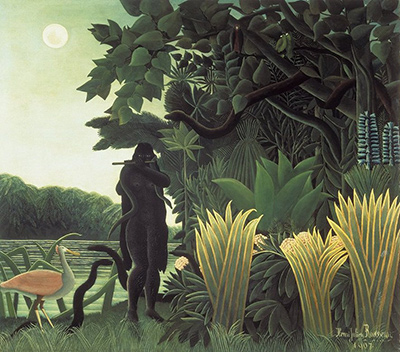
Many aspiring painters of the naive style stumble upon a specific hurdle when attempting to render the human figure, particularly the hands and the face. While the essence of this art form relies on the deliberate rejection of academic realism in favor of emotional truth and geometric clarity, the most frequent error lies in trying to capture the recognizable anatomy of a hand or the complex topography of a face without fundamentally altering their underlying structure. The goal is not to erase detail, but to reshape it into a stylized language that feels organic to the artist's vision, rather than a mere technical exercise in proportion. When the internal skeleton of these forms remains too rigidly bound to classical anatomy, the result often feels stiff, unnatural, and disconnected from the whimsical spirit that defines true naive art.
The Trap of Anatomical Realism
Artists often approach the naive style thinking that "simplification" means leaving out shading or reducing colors to flat blocks. However, true simplification is a structural process. If a painter looks at a hand and sees the knuckles, the phalanges, and the tendons exactly as they appear in a medical textbook or a realistic sketch, the painting will immediately lose its character. The human hand is a complex mechanism of overlapping planes and shifting curves. To paint a naive hand, one must first deconstruct this mechanism into simple geometric volumes, such as flattened cylinders or rounded cubes, before assembling them back together. If the anatomy is too detailed, the viewer's eye will fixate on the inaccuracies rather than the overall charm. The face presents a similar challenge; the human face is a map of muscles and bones that constantly shift expression. Without simplifying these features, a naive portrait risks looking like a caricature that relies on exaggeration rather than a coherent, simplified world.
Reducing Complexity to Essence
The key to mastering this style is to view the subject not as a biological entity, but as a composition of shapes. This requires a mental shift where the artist ignores the specific name of a bone or muscle and focuses instead on its silhouette and volume. For instance, a finger should not be a tapering rod but a thick, rounded shape that connects seamlessly to the palm. A nose should be a single solid mass, perhaps with a slight indentation, rather than a complex structure of cartilage and skin texture. This reduction allows the artist to prioritize the rhythm of the line and the harmony of the color, which are the true drivers of the naive aesthetic. By stripping away the intricate web of biological reality, the artist creates a space where imagination can flourish, allowing the image to breathe in a way that realistic depictions cannot.
Understanding the Geometric Foundation
To execute this simplification effectively, one must rely on a strict geometric foundation. The naive hand is often built upon a series of stacked, slightly overlapping ovals or cylinders. The fingers are not straight lines; they are volumetric forms that curve away from the viewer at different angles. When painting the palm, consider it a flat plane that is curved like a bowl. If you attempt to render the veins or the specific angles of the joints without simplifying the form first, you will end up with a hand that looks like a doll's hand with too much texture, lacking the fluid grace of the style. The same logic applies to the face. The forehead, cheeks, and chin can be reduced to broad, curved planes. The eyes become two distinct shapes, the mouth a curved line or a small oval, and the nose a simple bridge leading to the lips. This geometric approach ensures that the proportions feel balanced and intentional, rather than accidentally realistic.
Practical Steps for Execution
Applying these concepts requires a disciplined approach during the drawing and shading phases. Before committing the final colors, the artist must establish the simplified shapes. This involves breaking down the complex forms into their basic building blocks. Here is a practical workflow for achieving the desired look:
- Sketch the basic geometric shapes (circles, squares, ovals) that define the overall volume of the hand or face.
- Refine these shapes by adding slight curves and overlaps to create the illusion of connection and depth without detailed anatomy.
- Ignore all surface textures like wrinkles, pores, or veins until the final layer, if at all.
- Use flat, even colors within these simplified shapes to establish the tone and value.
- Add highlights only to the outermost edges of the simplified forms to suggest the light source.
By following these steps, the artist ensures that the anatomy serves the composition rather than dictating it. The result is a hand or a face that feels solid, yet strangely simplified, capturing the soul of the subject without getting bogged down in the details of the body.
Embracing the Artistic License
Ultimately, the naive style is an invitation to break the rules of reality for the sake of emotional expression. The mistake of trying to paint hands and faces without simplifying their anatomy stems from an inability to let go of the constraints of the natural world. It is a fear that simplification will make the work look unrecognizable. However, when done correctly, the simplification makes the work more recognizable in a spiritual sense. The viewer understands the idea of the hand or the face instantly, while the specific anatomical details are secondary to the feeling of the piece. The artist must trust that a rounded, simplified fist conveys strength or tenderness just as powerfully as a complex, realistic one. By embracing the geometric and simplified nature of these forms, the painter unlocks the full potential of the naive style, creating works that are distinct, memorable, and uniquely their own.