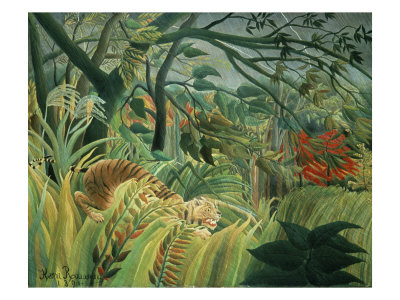
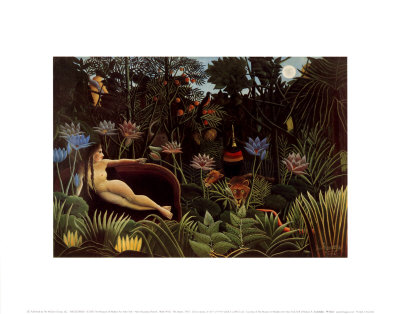
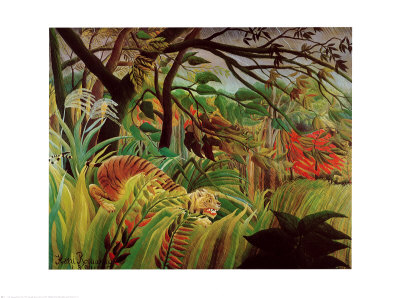
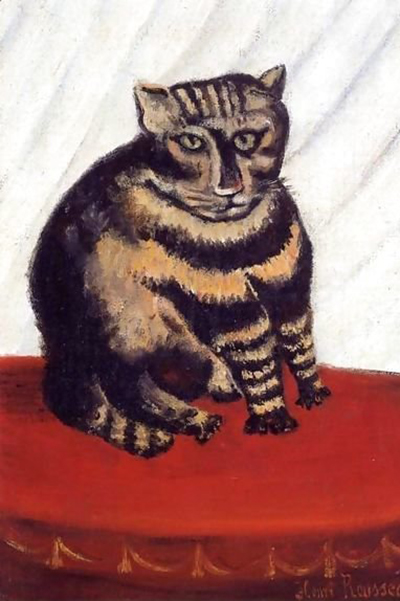
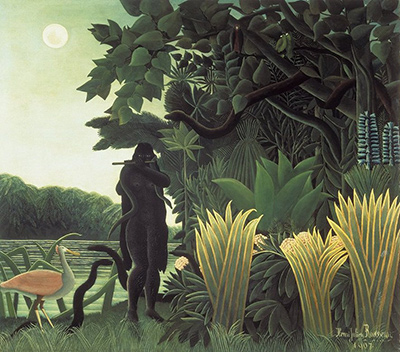
Many aspiring artists find themselves paralyzed by an endless internal dialogue before they even lift their brush, constantly analyzing the perfect angle of a tree branch or the exact hue of a sky. This overthinking creates a rigid framework that suffocates the very imagination Henri Rousseau celebrated through his boundless confidence. Instead of striving for mathematical perfection, the true path to artistic freedom lies in embracing the chaotic, immediate joy of spontaneity, allowing the hand to lead where the mind can only follow.
The Trap of Intellectual Control
The moment we begin to calculate every detail of our composition, we shift from being creators to being critics. We start asking questions like "What if the lighting is wrong?" or "Is this color too strong?" before a single stroke is made. This mental rehearsal prevents the artist from trusting their own instincts, leading to work that feels calculated and sterile. Rousseau understood that the magic of a painting often resides in the irrational leaps of the subconscious, not in the logical steps of a design textbook. When an artist tries to force the composition into a pre-conceived structure, they lose the ability to capture the fleeting essence of a moment, resulting in images that feel heavy with their own doubts rather than light with inspiration.
Embracing the Messy First Draft
To counteract the urge for perfection, one must learn to make mistakes without panic. In the studio, a mistake is not a failure but a necessary step toward discovery. When you stop trying to get it right the first time, the fear of judgment evaporates, and the creative flow returns. The initial marks on the canvas should be seen as exploratory gestures, rough sketches of feeling rather than final judgments of value. By accepting that the first version will likely look messy or unconventional, you free yourself to dive deeper into the subject matter with a passion that intellectual hesitation cannot match.
Practical Strategies for Spontaneous Execution
How can an artist practically shift from overthinking to acting? Here are five concrete steps to help you break free from the mental block:
- Set a strict time limit on your initial layer to force yourself to make decisions quickly without pausing to analyze.
- Use loose, wet-on-wet techniques that allow forms to bleed and blur, preventing the rigid lines that come from careful planning.
- Turn off your internal critic; if you feel the urge to fix something while painting, let it go and paint over it instead.
- Work from a single reference point rather than a full reference image, which reduces the cognitive load of comparing your work to a complex photograph.
- Focus on texture and movement rather than color theory or anatomical precision during the early stages of the piece.
By implementing these strategies, the artist begins to trust their physical connection to the medium. The hand moves with a rhythm that the mind cannot dictate, creating a natural harmony between the act of painting and the image that emerges.
The Power of Irregularity
Art history is replete with examples of works that defy traditional rules of composition and yet resonate deeply with viewers. The irregularity and asymmetry found in many great paintings are not flaws; they are signs of life and human experience. When we embrace spontaneity, we allow the composition to evolve organically, guided by the energy of the moment rather than the static rules of an art class. This approach invites the viewer into the narrative of the painting, as the unexpected choices made by the artist become the very reason the work feels authentic and alive.
Trusting Your Instincts in the End
Ultimately, the goal is not to produce a masterpiece on the first try, but to produce a work that is honest to your own vision. Overthinking tries to please an imaginary audience or an invisible standard of perfection, while spontaneity speaks directly to your own soul. By letting go of the need to control every element, you open the door to a more profound and personal form of expression. The next time you stand before your canvas, try to remember that the best compositions often come from the place where logic ends and feeling begins, trusting that the magic will find a way to settle into the space you have created.