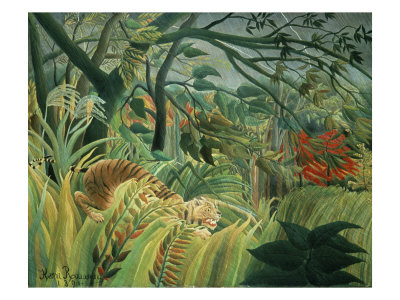
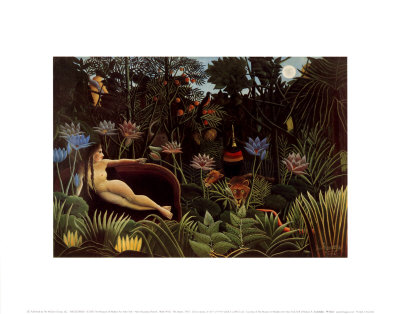
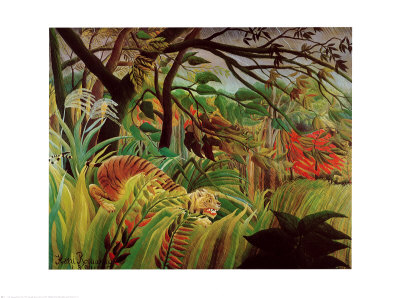
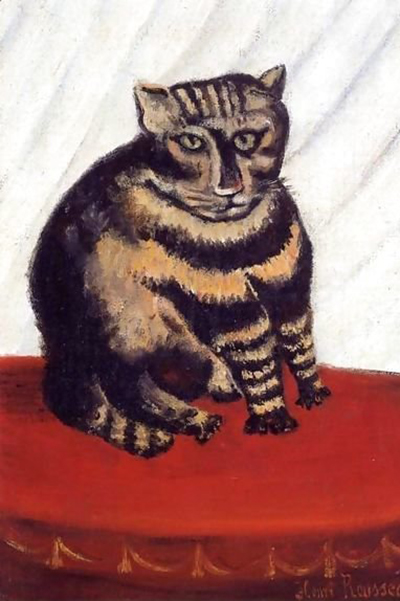
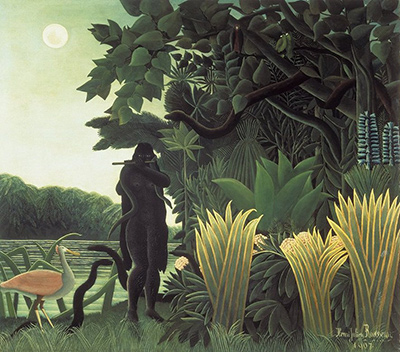
Many aspiring artists mistake the raw, unrefined quality of Henri Rousseau's jungle scenes for mere messiness, leading to works that feel cluttered rather than evocative. While the true spirit of naïve art thrives on its departure from strict academic rules, the line between charming simplicity and unintentional chaos is thin, and crossing it can ruin the viewer's immersion. This guide explores how to maintain that distinct, dreamlike quality without sacrificing the structural integrity that makes a painting legible and beautiful.
Understanding the Source of the "Mess"
The primary source of confusion often lies in the artist's expectation of perfection versus the reality of the naïve style. When an artist attempts to replicate Rousseau's style too literally, they may end up copying his composition without understanding the underlying logic that holds his seemingly random elements together. It is not that his paintings are sloppy; rather, they are constructed with a deliberate freedom that ignores traditional perspective but adheres to a specific emotional truth. The "mess" is actually a collection of distinct shapes and colors placed with intention, not accident. If a painting looks untidy, it is usually because the artist has tried to force a realistic representation onto a canvas that is meant to suggest an impossible, dream-world logic.
Balancing Composition with Intentional Disorder
To avoid making a work look truly messy, one must distinguish between a lack of planning and a lack of order. A common pitfall is placing too many elements in the foreground, causing the eye to bounce erratically without finding a resting point. In naïve art, the composition should still guide the viewer, even if it defies the rules of foreshortening or vanishing points. One effective strategy is to establish a clear focal point, perhaps a central figure or a dominant tree, around which all other details orbit. This creates a sense of unity, ensuring that while the details are varied and unexpected, they do not overwhelm the main subject.
The Power of Negative Space and Rhythm
A critical element in preventing visual clutter is the careful management of negative space and the rhythmic repetition of forms. Rousseau often utilized large areas of flat color to break up the complexity of his scenes, allowing the eye to breathe. When a canvas feels packed too tightly, it often indicates a failure to let the composition rest. By introducing blocks of solid color or leaving significant empty space between groups of objects, an artist can create a visual rhythm that feels organic rather than chaotic. This rhythmic quality is what separates a successful naïve piece from a chaotic scribble; it is the invisible hand that arranges the apparent disorder into a harmonious whole.
Avoiding the Trap of Over-Detailing
Another frequent error is the temptation to add too much detail, believing that more information equals better art. However, in the realm of naïve painting, less is often more because the goal is to capture a memory or a feeling, not a photographic record. When artists add excessive fine lines or intricate textures that mimic realistic rendering, they inadvertently step out of the naïve realm and into a style that feels technical and constrained. Instead of focusing on every leaf or feather, the artist should focus on the overall impression of the object. Simplifying forms and reducing the number of distinct lines can prevent the painting from becoming visually noisy, allowing the bold colors and simplified shapes to take center stage.
Practical Steps for Refining Your Work
To ensure your final piece achieves the desired balance of charm and clarity, consider implementing the following practical adjustments during your review process:
- Step back and view from a distance: This is the most crucial step, as it helps you see the overall shape and mass of your work rather than getting lost in individual details.
- Identify the "noise": Look for areas where too many lines or colors are competing for attention and consider reducing the complexity there by merging shapes or simplifying patterns.
- Check the flow of the eye: Trace the path your eye takes across the painting; if it gets stuck or wanders aimlessly, you likely have too much competing information.
- Evaluate the color relationships: Ensure that your bold colors have enough contrast and separation so they define the shapes rather than blending into a muddy mess.
- Ask if the story is clear: Does the painting convey a specific mood or scene immediately? If the details obscure the main subject, remove some to let the core message shine through.
By consciously managing these aspects of composition and detail, you can harness the unique energy of the naïve style without falling into the trap of visual clutter, creating works that feel both authentic and beautifully structured.
Related reading
- The Digital Brush: Reimagining the Dream World of Rousseau
- The Child in the Jungle: Cultivating the Spirit of Naïve Art
- Finding Your Own Wild Garden: A Guide to Choosing Subjects in Naïve Art
- The Artist's Canvas: Unveiling the Essentials of Naïve Creation
- Unlocking the Surreal Garden: A Guide to Finding Historical Naïve Art for Inspiration