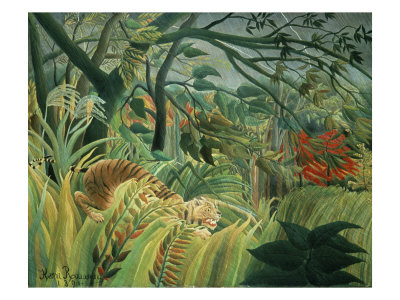
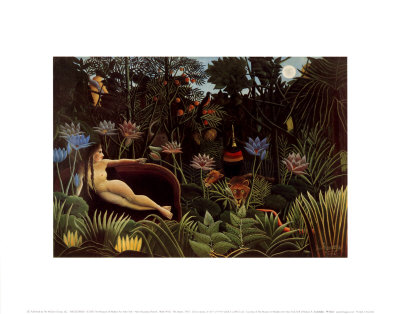
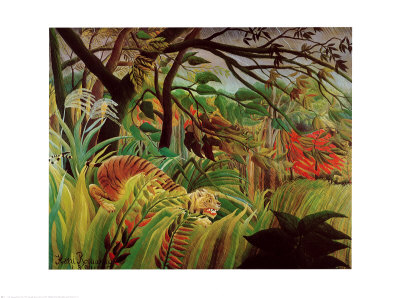
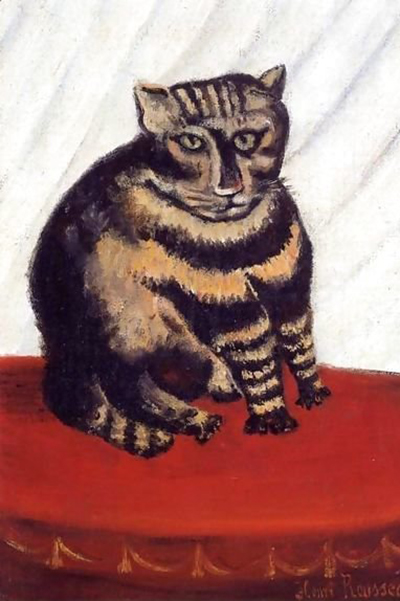
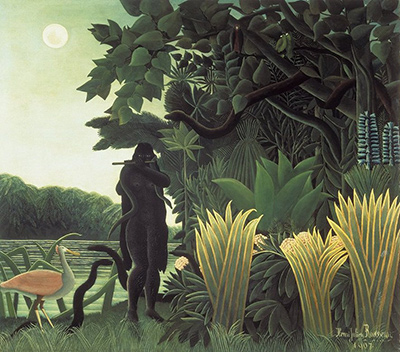
The allure of Henri Rousseau's work often stems from the shocking contrast between his utterly fantastical subjects and his brutally simple execution. Viewers frequently find themselves captivated by the exotic lions, impossible cities, or dancing figures, only to realize with a jolt that these complex narratives are rendered with a primitive brushstroke that belies their grandeur. This initial fascination is a double-edged sword; while the subject matter grabs attention, it can inadvertently cause the observer to overlook the true genius of the artist's technique. The danger lies in allowing the intricate detail of the scene to distract from the remarkable simplicity of the visual language, leading to a misunderstanding of what makes these works so revolutionary in the history of art.
The Illusion of Complexity
Many new admirers approach Rousseau's paintings with eyes wide open to see the impossible geography and the wild beasts roaming free. When confronted with a tiger perched atop a tree in a jungle that defies logic, the mind naturally tries to solve the puzzle of how such a scene was created. This intellectual engagement often shifts the focus from the painting itself to the story it tells. The viewer becomes an archaeologist of imagination, trying to decode the surreal narrative rather than appreciating the raw, unpolished surface. This is a common pitfall where the content consumes the form. By focusing on the "what" of the painting—the lions, the zebras, the strange architectural structures—the observer risks missing the "how," which is the deliberate simplification of light, shadow, and form.
The Power of the Unpolished Brushstroke
The core of Rousseau's success is not in the accuracy of the depiction but in the freedom of the execution. Unlike the academic painters of his time who sought to perfect every shadow and texture, Rousseau painted with a speed and decisiveness that felt almost accidental. His brushstrokes are short, sharp, and often lack the smooth blending one might expect from a professional artist. This lack of refinement is not a flaw; it is the very strength of the style. It creates a sense of immediacy and vitality that polished realism can never achieve. When the eye is drawn to the complexity of the subject, it fails to rest on these energetic marks, treating them as mere background noise rather than the primary vehicle of expression.
Misinterpreting the Color Palette
Another frequent error involves the handling of color. In many of Rousseau's works, the colors are vibrant, somewhat unnatural, and applied with a flatness that can look like a mistake to a trained eye accustomed to harmonious gradients. However, this chromatic boldness is intentional. The artist uses a limited but intense palette to create a dreamlike atmosphere where the colors pop against the white canvas. When the viewer is busy tracking the movement of a galloping horse or the intricate folds of a dress, they tend to ignore how these colors interact and how they define the space. The simplification of color serves to elevate the subject, making the exotic feel even more distant and magical, but this effect is lost when the eye is too busy decoding the narrative elements.
Why the Simplification Matters
The reason Rousseau chose to simplify his style so drastically is that it forced the viewer to engage with the painting on an emotional level rather than an analytical one. By stripping away the technical jargon of academic painting, he allowed the spirit of the scene to shine through. The lack of realistic shading means the forms do not recede into a three-dimensional space in a traditional way; instead, they exist in a flat, two-dimensional realm of pure imagination. If one lets the subject distract them, they miss this intentional flatness. The beauty of the painting is not in the realism of the tiger, but in the way the artist painted the tiger—a simple mark of black and white against a background of green and blue, devoid of any attempt at photorealism.
Practical Advice for the Observer
To truly appreciate the depth of Henri Rousseau's work, one must adopt a specific mindset when viewing his pieces. It requires shifting the focus from the incredible story being told to the method used to tell it. Here are a few practical steps to avoid the common mistake of distraction:
- Pause to look only at the brushstrokes, ignoring the subject matter entirely for thirty seconds.
- Notice how the artist uses simplified shapes to define the creatures and landscapes without trying to render them realistically.
- Observe the lack of blending in the shadows and how this creates a distinct, graphic quality.
- Consider how the flatness of the painting enhances the dreamlike quality of the scene rather than diminishing it.
By consciously redirecting your attention from the fantastical content to the simplified style, you unlock the true nature of Rousseau's genius. You begin to see not just a picture of a lion or a city, but a masterpiece of visual communication that transcends the limitations of reality.