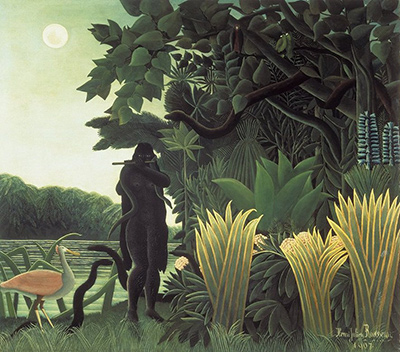
The "Sleeping Gypsy" series by Henri Rousseau stands as a profound cornerstone in the evolution of naive art, captivating observers with its ethereal glow and enigmatic narrative. While the works are often grouped together, they represent a distinct phase in the artist's career where the boundary between reality and imagination dissolved into a harmonious, dreamlike state. For those seeking to understand this specific collection, clarifying common misconceptions about their origin and meaning is essential before delving deeper into their unique aesthetic.
The Timeline of Creation and Stylistic Shift
To truly appreciate the "Sleeping Gypsy" paintings, one must recognize that they were not created in a vacuum but emerged during a pivotal transition in Rousseau's career. Roughly between 1894 and 1896, the artist moved away from his earlier depictions of the French countryside towards exotic, nocturnal themes inspired by his time in the Sardinian colony in Paris. This period marked a significant departure from his realistic roots, as he began to incorporate elements of the occult, fantasy, and a flattened perspective that would come to define his later fame.
The Nature of the Subject and Its Symbolism
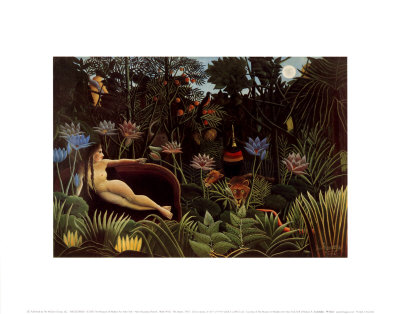
A frequent inquiry among collectors and students concerns the identity of the sleeping figure within these canvases. Contrary to popular belief, the gypsy woman is rarely a direct portrait of a single individual but rather a composite embodiment of Rousseau's internal psyche and his fascination with the unconscious mind. Her features are intentionally soft and indistinct, inviting the viewer to project their own emotions onto the silent form.
Decoding the Visual Language
The symbolism within the "Sleeping Gypsy" series is multifaceted, reflecting a complex interplay between folklore, psychology, and artistic technique. The heavy, dark outlines used to define forms mimic the sharp contours of a dream, while the vibrant, flat backgrounds suggest the vivid, unfiltered nature of sleep. Furthermore, the inclusion of oversized plants, strange creatures, and surreal architectural elements serves to create a fantastical realm that defies the laws of physics, reinforcing the theme of suspended time.
Key Characteristics of the Works
Understanding the specific visual traits that unify the series is crucial for accurate identification and interpretation. The following points highlight the consistent elements found across the majority of the "Sleeping Gypsy" compositions:
- The figure is almost always depicted in a passive, receptive state, suggesting a surrender to the unknown.
- Surrounding elements frequently include plants with exaggerated, almost skeletal forms that contrast sharply with the softness of the human body.
- The lighting is predominantly artificial or moonlight, casting deep shadows that enhance the mysterious and somber quality of the scene.
- The framing of the composition often leaves significant empty space, drawing the viewer's eye directly to the serene face of the sleeping figure.
- The color palettes vary significantly, shifting from cool blues and greens to warm ochres and deep reds to reflect the specific atmosphere of each canvas.
- The influence of Japanese woodblock prints is evident in the flattened perspective and the way depth cues are removed to focus on immediate visual impact.
- There is a deliberate absence of detailed background clutter, ensuring that the focus remains entirely on the singular, sleeping entity.
The Enduring Legacy of the Naive Style
The impact of the "Sleeping Gypsy" series extends far beyond its historical context to influence the broader movements of naive art and surrealism. Rousseau's revolutionary ability to capture a dreamlike quality without adhering to technical realism continues to inspire contemporary artists today. By studying these works, viewers gain profound insight into how an artist can transform everyday observations into something entirely otherworldly. Ultimately, the series stands as a timeless testament to the power of imagination and the enduring mystery that lies within the human sleep.