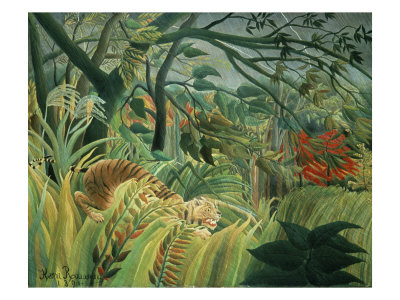
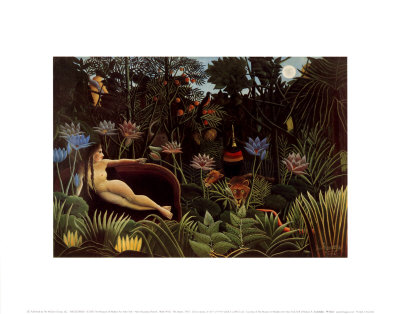
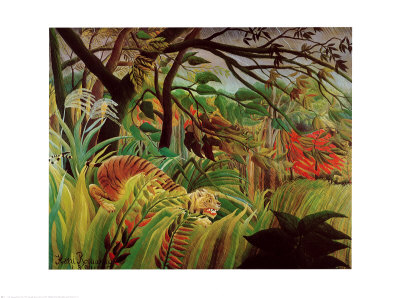
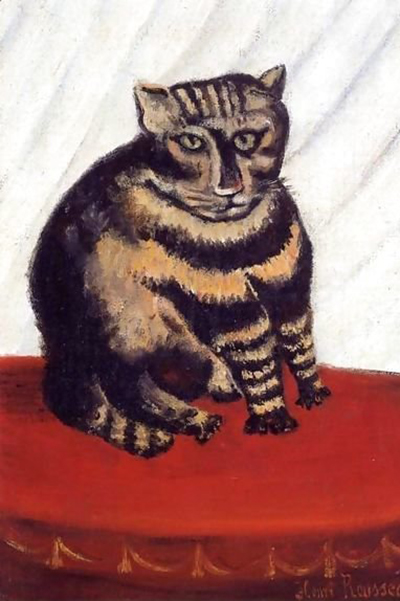
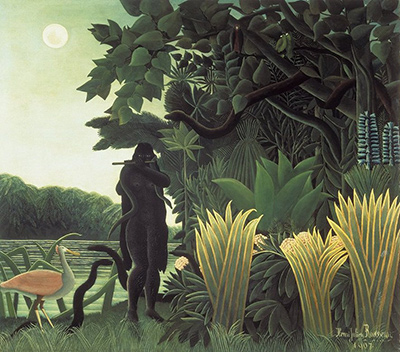
Henri Rousseau was not known for his academic rigor or precise anatomical studies; instead, he mastered the art of suggestion, using light and color to evoke a dreamlike quality that made his jungle landscapes feel like memories rather than observations. For the modern printmaker seeking to replicate this unique, hazy atmosphere, the key lies not in heavy glazing or complex layering, but in the strategic application of light washes that soften edges and unify the composition into a singular, luminous vision. This guide will walk you through the essential techniques needed to achieve that signature Rousseau-esque blur, transforming ink into an ethereal veil.
Understanding the Hazy Aesthetic
The core of the Rousseau style lies in his rejection of sharp, defined lines in favor of a soft, dreamlike quality. He often painted scenes that seemed to exist in a perpetual state of twilight or dawn, where the air itself acts as a filter, blurring the boundaries between foreground and background. When translating this to printmaking, specifically using water-based inks or diluted inkjet media, the goal is to mimic this atmospheric penetration. The viewer should not be able to pinpoint exactly where one object ends and another begins; instead, the entire image should breathe with a unified, misty energy. This approach requires a shift in mindset from creating a hyper-realistic snapshot to capturing the emotional resonance of a moment frozen in time.
Mastering the Dilution Ratio
Achieving the right consistency for a hazy wash is perhaps the most critical technical step in this process. If the wash is too opaque, it will create harsh blocks of color that destroy the delicate mist effect. If it is too thin, the underlying paper texture will show through too prominently, creating a grainy rather than a smooth, floating appearance. Start by mixing your ink with water in a ratio of roughly 1:3 or even 1:4. Test this on scrap paper by applying a vertical streak; you want the ink to spread slowly, leaving a trail that fades into the background without drying instantly into a rigid line. The consistency should feel like milk that has been allowed to sit for a moment, thick enough to hold shape but fluid enough to merge seamlessly with adjacent colors.
Layering for Depth and Mystery
Once you have your base washes prepared, the magic happens through controlled layering. Rousseau rarely used a single layer of ink to define a whole scene; he built his images through the accumulation of many semi-transparent strokes. Begin by establishing a light, washy background that suggests distance and air. Next, apply mid-tones with slightly more saturation but still maintaining that watered-down quality. The secret is to avoid letting the new layer completely cover the previous one. Instead, allow the edges to bleed slightly into the layer below, creating a soft gradient that mimics the way light diffuses through fog. As you add further layers, keep your application light and uneven, leaving small patches of the previous layers visible to maintain a sense of texture and complexity without sacrificing the overall softness.
Techniques for Softening Edges
To truly achieve the blurred look, you must actively work against the natural tendency of ink to dry sharply. There are several specific maneuvers you can employ during the printing process to ensure boundaries remain indistinct.
- Avoid pressure-heavy roller passes: When applying the wash, use light, sweeping motions rather than forcing the ink down. Heavy pressure will compress the pigment and create hard lines that ruin the hazy effect.
- Utilize wet-on-wet techniques: Apply the next layer of ink while the previous one is still damp. This encourages the pigments to mingle and diffuse naturally, creating organic, soft transitions between colors.
- Embrace imperfect edges: Do not strive for a clean, crisp cut-off between objects. Instead, accept that the edges will be fuzzy and slightly irregular, which is exactly what gives the image its dreamlike, naive character.
The Final Touches
The final stage involves refining the image without reintroducing definition. At this point, you might add very dark, concentrated inks to create focal points, but these should be applied sparingly and often slightly out of focus to maintain the illusion of depth. The overall result should feel like a memory being recalled from a distance, where the details are present but softened by the passage of time. Remember that the power of this style lies in its ability to make the viewer feel present in the scene despite the lack of sharp detail. By focusing on the interplay of light, the careful dilution of your inks, and the patience required to let layers blend, you can create prints that capture the timeless, mysterious beauty of a Rousseau landscape, proving that sometimes the most profound images are the ones that appear the least defined.