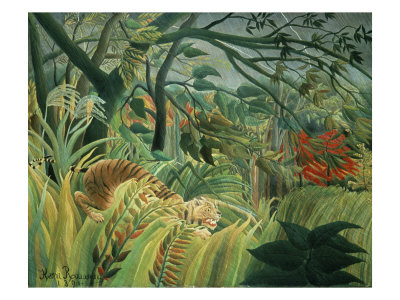
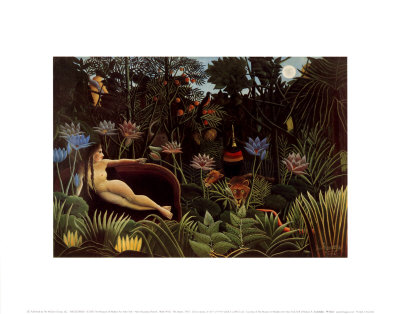
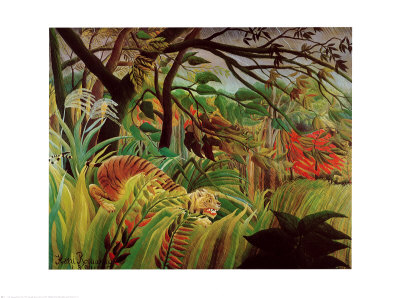
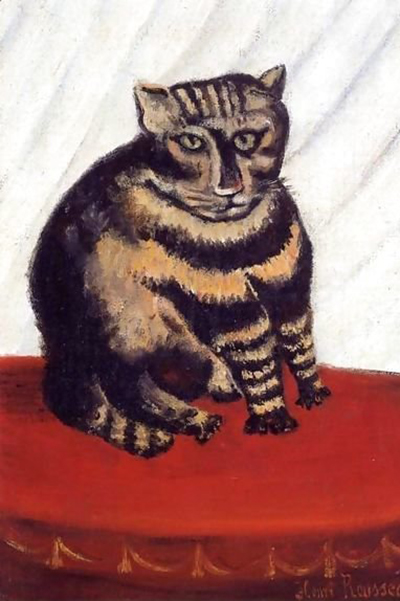
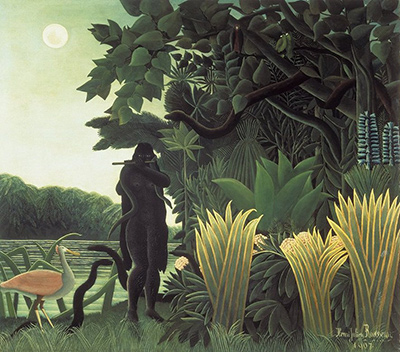
Capturing the essence of Henri Rousseau's dreamlike world does not require microscopic detail; it demands a fearless approach to scale and texture. By embracing oversized tools and a relaxed hand, you can mimic the vibrant, flattened planes of his jungle scenes and the rhythmic patterns of his animals. This guide focuses on mastering the mechanics of large brushes to achieve that signature naïve aesthetic, transforming ordinary pigment into a visual symphony of light and color.
The Philosophy of the Big Brush
The core of the Rousseau style lies in the rejection of hyper-realism. Unlike traditional academic painting, which seeks to capture every grain of sand or vein in a leaf, the naïve approach celebrates the illusion of the eye. Large brushes serve as the primary vehicle for this philosophy, allowing the artist to cover negative space and create the flat, mosaic-like surfaces that define the work. When you switch from fine detail to broad strokes, you are essentially telling the viewer to step back and see the composition as a whole, just as the original observer might have. This shift in perspective is crucial; it forces the painting away from mere representation and toward emotional expression.
To achieve this look, you must abandon the idea of "polishing" your surface. The texture of the paint application matters more than its smoothness. A large brush leaves behind a distinct mark, a physical trace of the hand that adds energy to the piece. It is about suggesting the form rather than defining the edge with precision. The goal is to create a visual rhythm where shapes flow into one another without sharp, jarring boundaries. This technique allows the viewer's imagination to fill in the gaps, creating a dynamic interplay between what is seen and what is imagined.
Selecting the Right Tools for the Journey
Your equipment plays a pivotal role in determining the final outcome. For this specific technique, you will need a mix of flat and round brushes, but they must be significantly larger than what you would use for conventional portrait work. Flat brushes with wide, stiff bristles are essential for creating the sweeping, horizontal bands of color found in the horizons of his landscapes. These tools allow you to lay down thick layers of paint quickly, establishing the basic color palette before adding finer details.
However, the round brush is equally important for capturing the organic shapes of his fauna. A large round brush, preferably with soft but resilient bristles, enables you to create rounded forms that seem to bounce off the canvas. The key is to use the full width of the brush to apply paint, rather than the tip. This ensures that the edges of the shapes remain soft yet distinct, avoiding the muddy blends that can ruin a naïve composition. Additionally, consider using a palette knife alongside your brushes; it provides another dimension of texture that complements the brushwork, adding a sculptural quality to the flat planes.
Mastering the Application Technique
Once you have your tools, the execution requires a specific set of movements. The secret to the Rousseau look is in the speed and confidence of your strokes. Do not hover over the canvas; commit to the stroke fully. When applying color to a large area, lift the brush and let the paint fall onto the surface, allowing gravity to assist in spreading the pigment. This results in those characteristic, slightly uneven edges that give the painting its raw, honest feel.
If you are working with watercolors, which are often associated with the naïve style, the technique shifts slightly. Use the large brush to splash and pool the water, letting the colors bleed into each other naturally without trying to control the merge. The resulting soft transitions mimic the atmospheric perspective found in his dreamscapes. For oil or acrylic mediums, focus on the thickness of the application. Apply paint in thick, impasto-like layers with the large brush, ensuring that the texture remains visible upon close inspection. This depth creates a sense of movement and energy that is impossible to achieve with thin, watery washes alone.
Creating Compositions with Flat Planes
The arrangement of elements on the canvas is just as important as the brushwork itself. Rousseau's compositions often feature a simplified foreground and a receding middle ground, separated by bold lines of color. To replicate this, use your large brush to create solid blocks of color that define these zones. Instead of blending the horizon line subtly, draw it with a confident, sweeping stroke that divides the sky from the earth. This stark separation enhances the dreamlike quality of the scene, making the viewer feel as though they are looking into a painted window rather than observing reality.
When placing your subjects, such as a bird or a flower, keep them distinct from the background. Do not let the colors of the background bleed into the subject; maintain a clear visual boundary using the large brush to define the edges. This separation ensures that each element stands out with maximum impact. The simplicity of the forms allows the colors to do the heavy lifting, creating a visual harmony that is both vibrant and restful. Remember, the less detail you add, the more powerful the overall impression becomes.
Developing a Personal Signature Style
While studying Henri Rousseau is an excellent starting point, the most successful work comes from adapting his principles to your own voice. Experiment with different combinations of large and small brushes within the same piece to create interesting contrasts in texture. You might use a large flat for the sky and a smaller round for the foliage, creating a rhythmic variation that guides the viewer's eye across the canvas.
Finally, do not be afraid to make mistakes. In naïve art, an accidental splash of paint or an oversized stroke often becomes the most memorable part of the piece. Embrace the imperfections as part of the artistic process. By consistently practicing the use of large brushes and focusing on the overall composition rather than individual details, you will naturally begin to develop a unique style that honors the spirit of the masters while expressing your own vision. The journey from novice to confident painter is paved with bold, uninhibited strokes.
To truly internalize these methods, consider integrating the following habits into your daily practice routine:
- Always start by sketching a rough outline with a small brush before committing to large, broad strokes.
- Mix your colors directly on the palette to ensure the pigments remain vibrant and unoxidized.
- Work in small sections, completing one area entirely before moving to the next to maintain focus.
- Step back frequently to assess the balance of color and the flow of your large brushstrokes.
- Resist the urge to refine edges until the entire composition has dried and settled.
- Use a rag to lift excess paint from your brush tip, ensuring a clean load before each application.
- Experiment with layering thin washes over thick impasto to create depth without losing the flat aesthetic.